
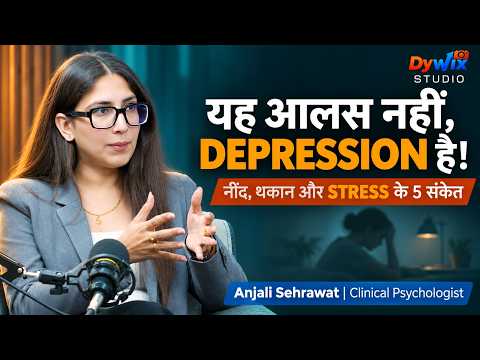
यह आलस है या Depression? | Anxiety & Overthinking | Why Men Hide Emotions & Silent Mental Breakdown!
Stress or something more? Anjali Sehrawat on anxiety, depression and help. Therapy, sleep & everyday signs—clearly explained. People often wait until they feel overwhelmed before asking for help. Wh...
Stress or something more?
Anjali Sehrawat on anxiety, depression and help.
Therapy, sleep & everyday signs—clearly explained.
People often wait until they feel overwhelmed before asking for help. When daily life feels harder to manage, it is worth speaking with a qualified professional. Therapy is not a magic fix or a one-size-fits-all timeline; it is a gradual process of understanding patterns, setting goals and building coping skills.
The conversation separates ordinary stress from persistent changes in mood, sleep, appetite, concentration and daily functioning. It looks at career pressure, social media’s mixed effects, family and workplace context, and why sleep is part of mental wellbeing—not laziness. Anjali explains what a first therapy session can involve, how psychologists and psychiatrists differ, and why one symptom or an online quiz cannot diagnose a condition.
Three lines worth remembering: “लाइफ में प्रॉब्लम्स हमेशा होंगी।” “अपने ब्रेकडाउन से पहले ही एक प्रोफेशनल को सीक कर लोगे।” “थेरेपी में ग्रेजुअल चेंज देखने को मिलता है।”
WHAT YOU’LL TAKE AWAY
• How duration and impact on everyday functioning matter when thinking about mental health concerns.
• Which changes in sleep, appetite, focus, mood or interest may be worth discussing with a professional.
• How to think about stress versus depression without treating this video as a self-diagnosis checklist.
• When to seek support: you do not have to wait for a breakdown to ask for help.
• What therapy can do beyond advice, and why progress can be gradual and different for each person.
• What may happen in a first therapy session: understanding concerns, building rapport and setting goals together.
• The difference between a psychologist’s therapy work and a psychiatrist’s medical role.
• How social media, comparison, FOMO, online connection and cyberbullying can affect young people differently.
• Why anxiety, panic attacks, OCD, bipolar disorder and PTSD need careful assessment—not assumptions based on one behaviour.
• Why sleep, relationships, family context and emotional expression belong in the wider conversation about wellbeing.
CHAPTERS
00:00 The questions young people ask about mental health
01:21 What does “mental illness” mean?
02:43 Signs that begin to affect daily life
04:18 Everyday stress or depression: what changes?
06:40 When is it time to seek professional help?
07:46 Why stigma still makes people hesitate
09:05 Therapy is more than advice
11:10 Psychologist or psychiatrist: who does what?
12:27 Career pressure, social media and young people
14:15 How your environment can affect wellbeing
20:35 Sleep, focus and the “lazy” label
21:28 Gut health, relationships and whole-person wellbeing
23:09 Anxiety, panic and depression: understanding the terms
25:26 Why some men find it hard to express emotions
26:52 What to expect in a first therapy session
27:50 Bipolar disorder: why assessment matters
29:15 OCD is not simply being neat or clean
31:01 PTSD, trauma and seeking support
37:56 CBT, DBT and EMDR: therapy approaches discussed
44:53 Setbacks, new problems and continuing care
ABOUT THE GUEST
Anjali Sehrawat is a Clinical Psychologist and therapist behind Alora Minds. Alora Minds identifies her as an RCI-registered Clinical Psychologist and supports concerns including anxiety, depression and relationships.
Online and in-person therapy: https://aloraminds.com/
ABOUT DYWIX STUDIO
DyWix Studio shares thoughtful conversations with professionals and people with lived experience.
Subscribe for grounded conversations on wellbeing, work, relationships and everyday life.
What part of this conversation do you wish more people understood? Share it respectfully below.
This episode is for education, not diagnosis or a substitute for individual mental-health care. For immediate support in India, call Tele-MANAS at 14416.
something more you can explore here -
- When should I seek therapy for anxiety?
- Stress vs depression: how can I tell the difference?
- What happens in a first therapy session?
- Psychologist vs psychiatrist: what is the difference?
- How does therapy help with overthinking?
- Anxiety vs panic attack: what’s the difference?
- How does sleep affect mental wellbeing?
- How can social media affect teenagers’ mental health?
- Anxiety kaise samjhein?
- Therapy kab leni chahiye?
#DyWixStudio #MentalHealth #AnjaliSehrawat